Context
One designer, the whole customer-facing surface.
Crewm8.ai is a 4-person AI startup. The product is an AI crewmate that chases invoices and drafts follow-ups inside Slack and Telegram.
- My exact role: landing page, design system, brand voice, pricing surface. I designed it and I shipped the code.
- Provable in git: every
landing-v3component is my commit, all ofsrc/stylestoo. 101 commits across the period. - Two engineers owned infra and the voice stack. The presentation layer was mine, end to end.
Problem · Act I
What I inherited was a dev tool wearing a price tag.
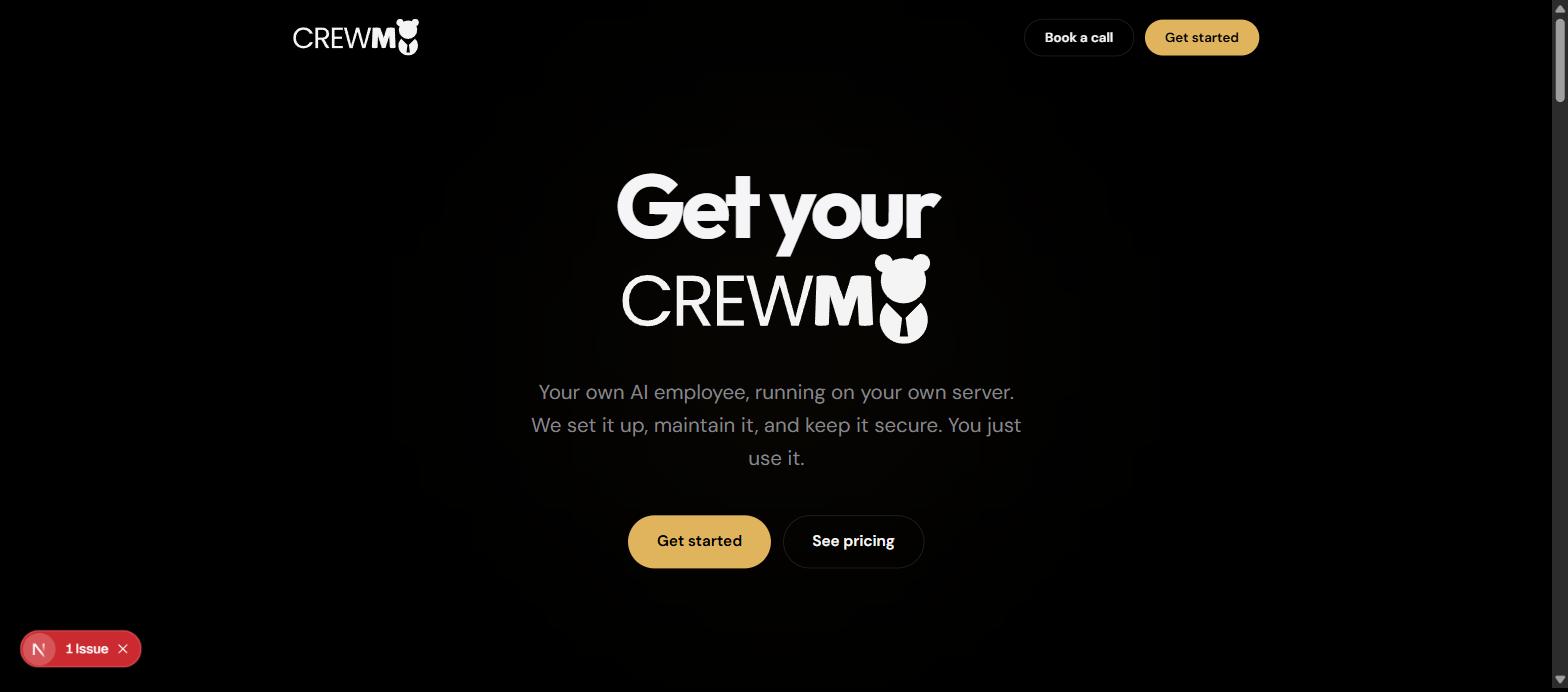
“Deploy AI agents in 60 seconds.” Dark luxury, gold accents, $250 a month, a “Book a call” funnel.
The founder had just repositioned the company from AI agent platform to managed AI employee, self-serve. The page said none of that. So I turned the brief into an executable plan and shipped v1 in three weeks.
Founder briefRepositioningv1 shipped May 1Problem · Act II
v1 and v2 fixed the story. The look still said “not for you.”
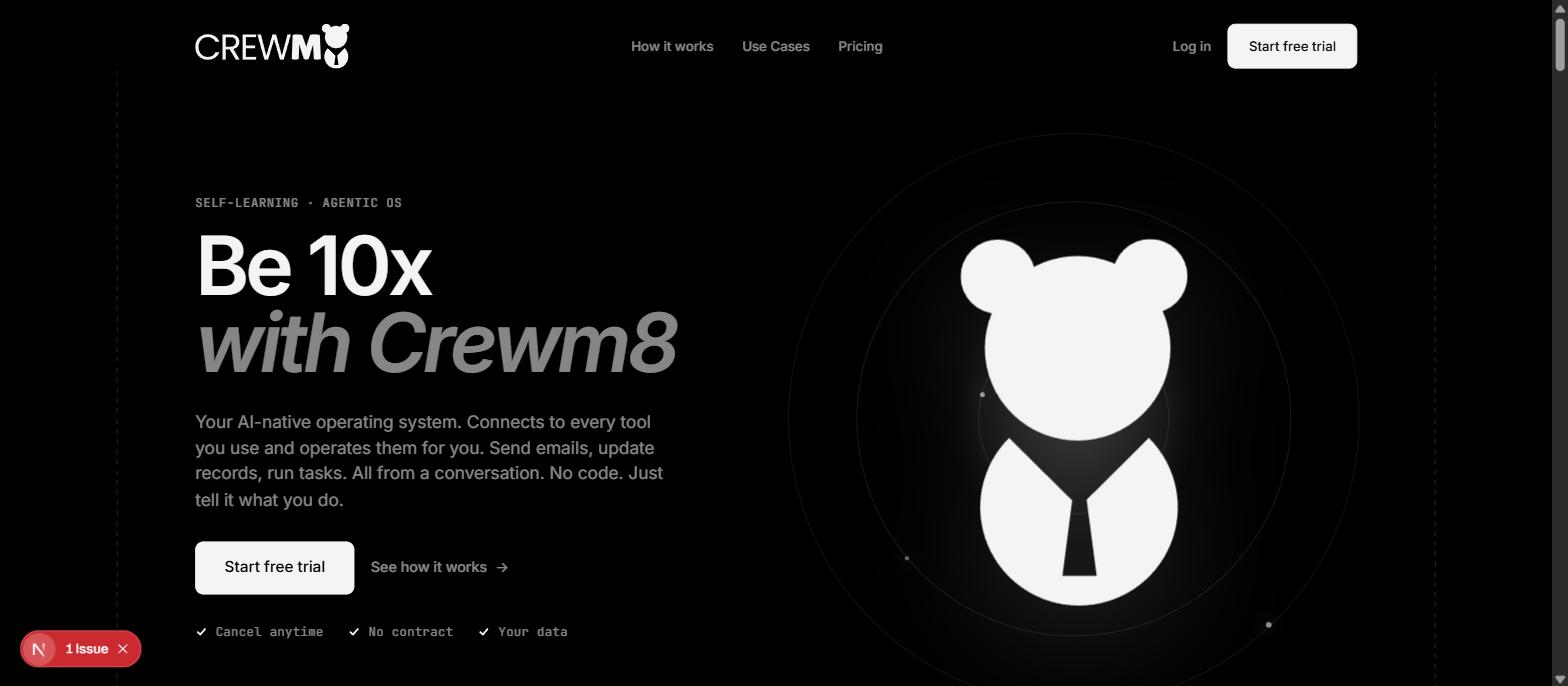
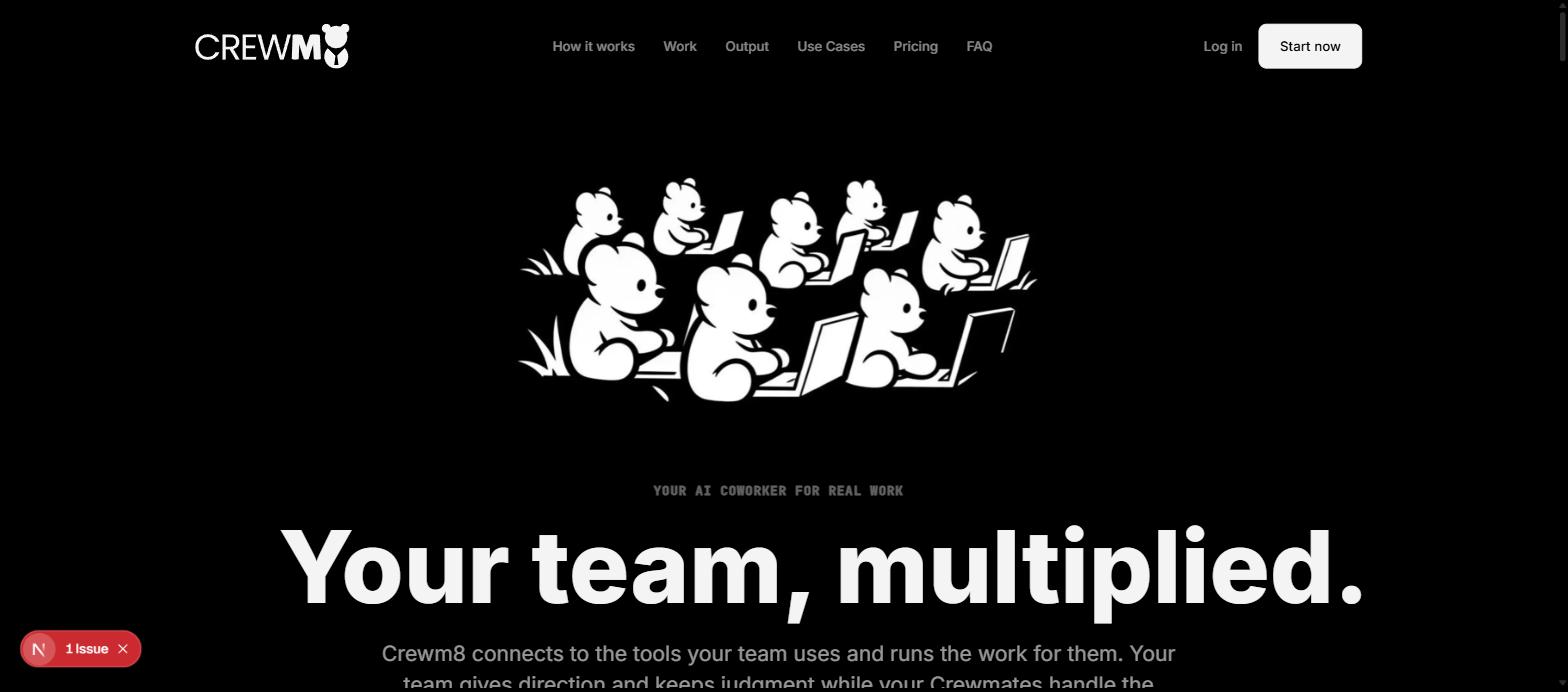
The founder wanted taste, something that read as bleeding-edge AI. I delivered exactly that: dark canvas, big claims, agent vocabulary. Founders liked it. Then we started user interviews.
The turn · user interviews, after v2
“I feel dumb reading this.”
a client, mid-interview. Then the same discomfort, interview after interview.
We had designed for the people we wanted to impress, not the people we wanted to hire us.
Our real buyer runs a 1 to 5 person business. They’re also the bookkeeper, the support desk, and the person chasing invoices at 11pm. To them, “agentic OS” reads as: this isn’t for you. The bet: keep the agent substance, make the surface a friendly colleague. If a salon owner understands the page, the tech crowd still will. The reverse is not true.
How the thinking moved · one map instead of forty wireframes
Signal, options, call. Three times over.
c8v3-* tokens.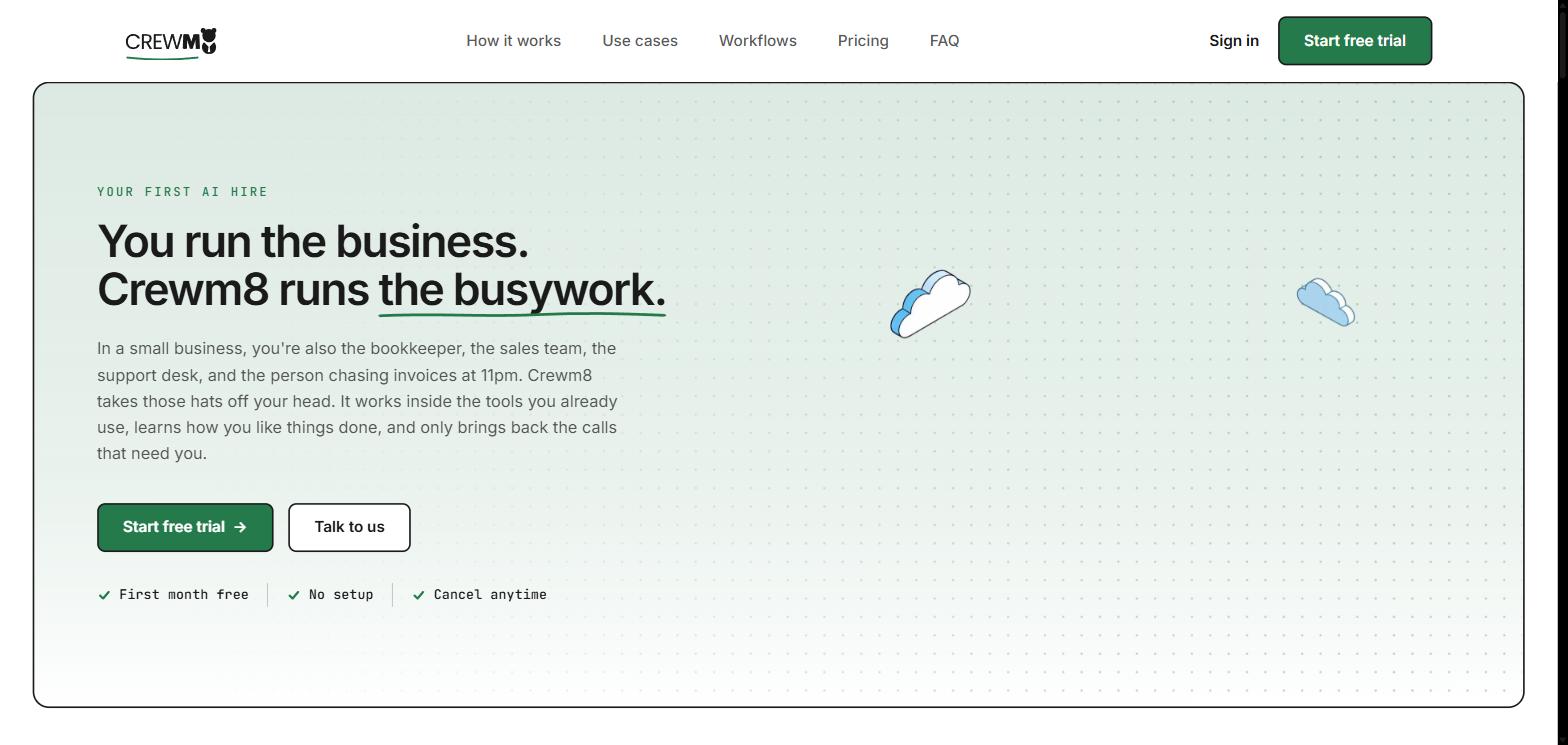
The decisions · each with what I rejected
Three calls I’d defend in any room.
01Invert dark to light.
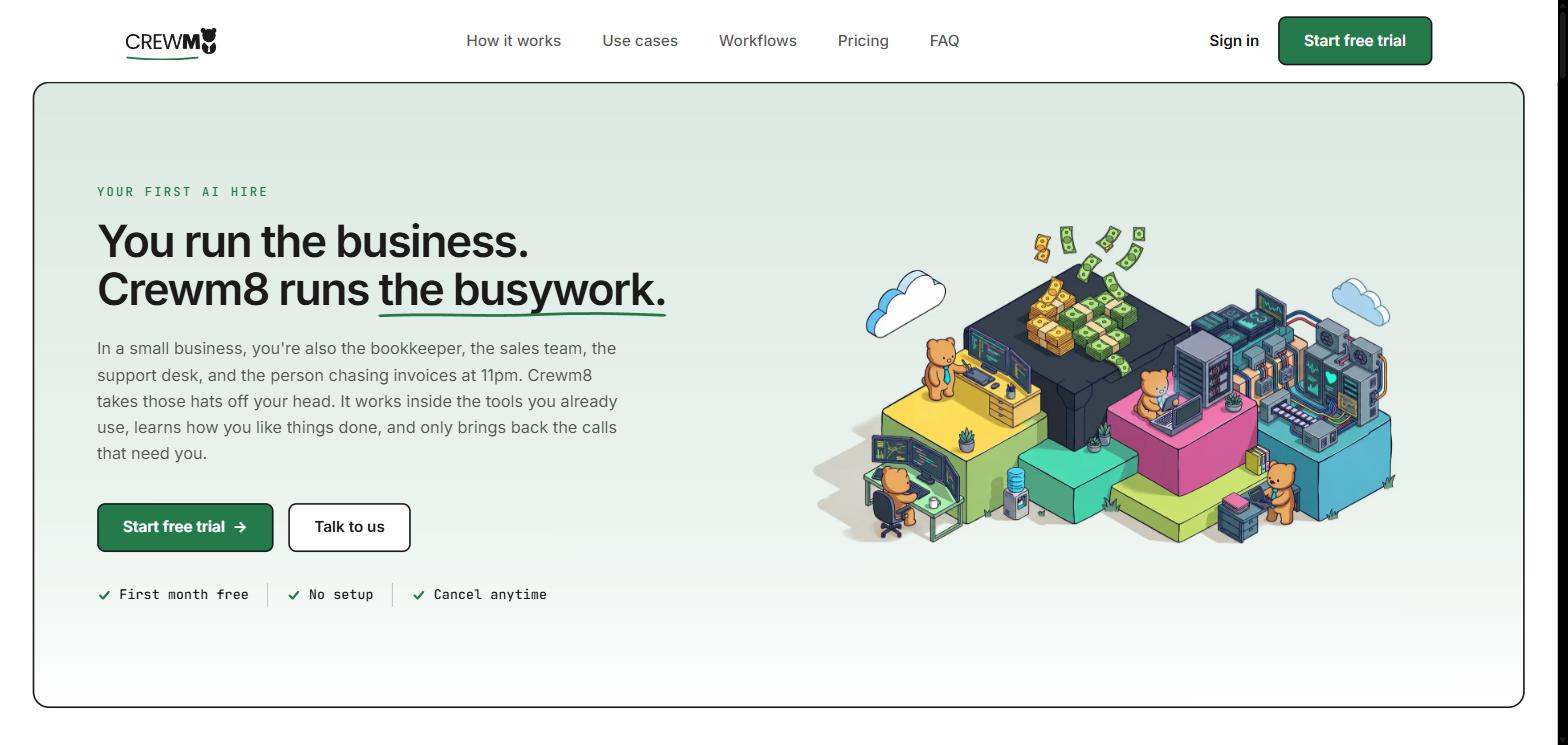
White paper canvas, ink lines, one forest green accent. Every AI startup in 2026 was dark. The darkness was the intimidation.
Rejected: one more dark iteration. We’d already proven it tested badly with the actual buyer.
02Build a friendly world, not a friendly coat of paint.
A “ligne-claire / comic-print” system: ink outlines, hand-drawn marker underlines, the bear crew actually working, mono eyebrows for tech credibility. Shipped as scoped three-layer tokens (c8v3-*) so v3 coexists with the legacy product UI.
Rejected: re-skinning v2 with lighter colors. A palette swap wouldn’t change what the page was saying.
03Say it in the buyer’s words.
Copy retargeted to 1 to 5 person businesses: “You run the business. Crewm8 runs the busywork.” Pricing anchored to reality: “A part-time VA costs $800 a month.”
Rejected: keeping enterprise and dev vocabulary to look bigger than we were.
Design system v3 · “ligne-claire / comic-print” · the system on one page
Rules I wrote down so decisions could be reused.
· tokens in three layers: _primitive, semantic, component. Namespaced c8v3-*to coexist with legacy UI. · retired colors stay documented with a “do not reintroduce” note.
The evolution wall · four eras, full pages, side by side
Scroll one page and all four scroll together.
v0APR · inherited
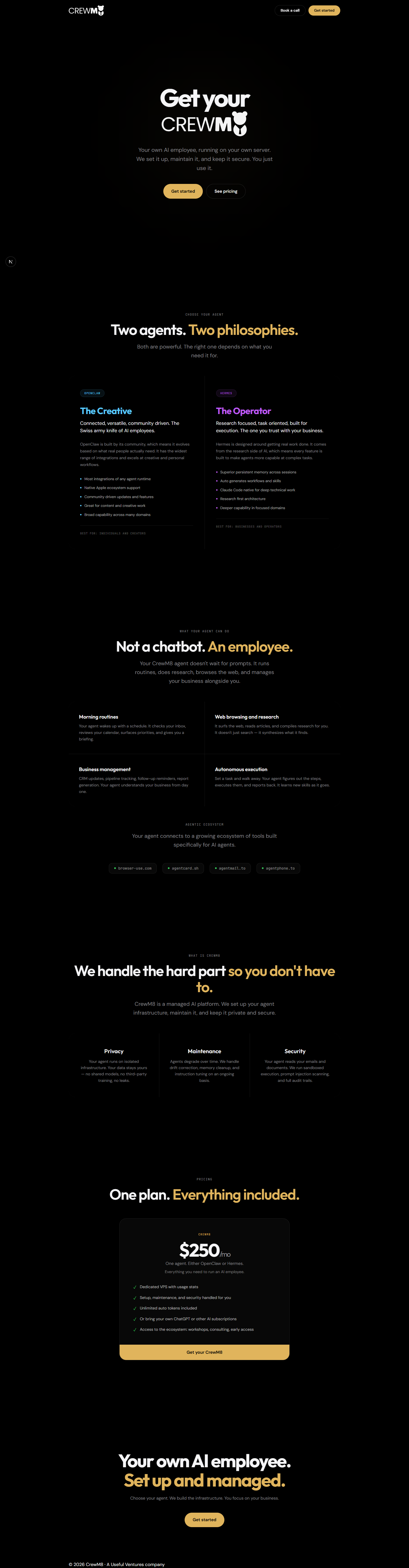
v1.5MAY 13 · retold, still dark

v2.5JUN 7 · voice applied

v3JUN 15 · the inversion

every capture is the real page, run from its own commit at 1440px. Nothing mocked, nothing recreated.
Solution · shipped Jun 10 to 15 · PRs #79 and #80
scroll the page ↑ · full v3, top to bottom
Every section answers the next objection a busy owner would raise.
- 1“What is this?”Hero: “You run the business. Crewm8 runs the busywork.” Plain words and trust chips.
- 2“Is it for me?”Role strip names their actual pains, like “the invoices you chase at night.”
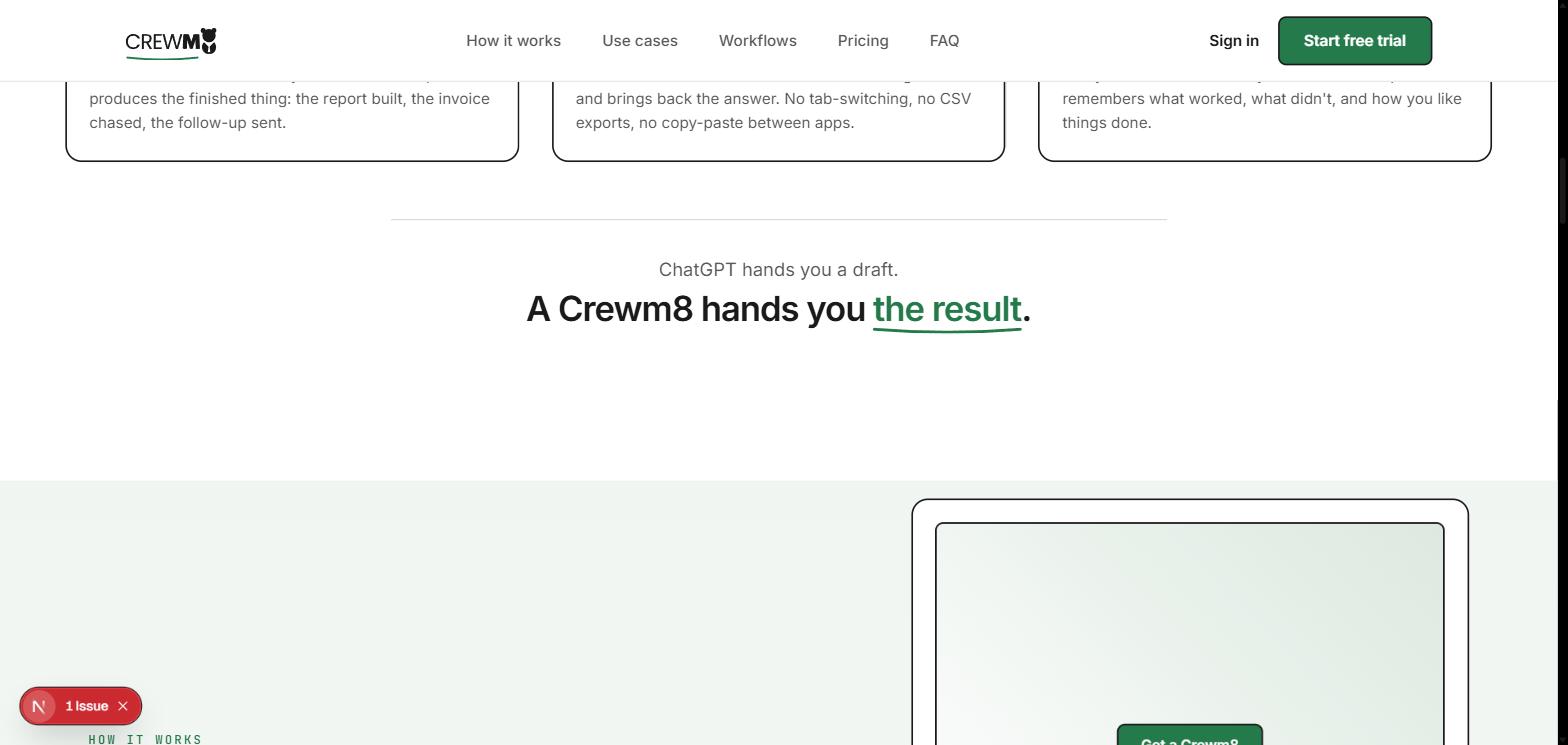
- 3“Why not just ChatGPT?”The comparison meets the #1 objection head-on: a draft vs the result.
- 4“Is it complicated?”Three illustrated steps. No code, no setup wizard.
- 5“Where does it live?”Real Slack and Telegram mocks. The product shown where they already work.
- 6“Can I afford it?”$50 a month, anchored against the $800 a month part-time VA it replaces.
- 7“What if it goes wrong?”FAQ: approval before shipping, what happens when it’s unsure, cancel anytime.
How I work · AI-native, versioned, fast
The loop that made three rebuilds cheap enough to be honest.
- Docs as AI context. I build with Claude Code against my own versioned design-system docs. The spec doubles as the model’s context. Every generation already speaks the system.
- Generate, audit, keep or kill. Exploration is cheap, so I audit hard. I ran a 5-part audit of my own shipped work (dead code, perf, UX, spacing, color), then shipped the fixes.
- Version everything. Design system v1 to v3, brand voice v1 to v2. Every version change traces to a written trigger. Decisions get reused, not re-litigated.
Impact
What moved.
One habit keeps these numbers honest. After shipping, I audited my own v3 across five dimensions and merged the fixes the same week.
Method: NPS collected after the v3 launch.
Learnings
What I’d tell the next me.
- Taste is audience fit, not fashion. The friendlier page looked less impressive and won where it counted.
- Versioned systems are how one person ships three rebuilds. A design system is a decision-reuse machine.
- Talk to the buyer before v1, not after v2. The “felt dumb” signal existed months earlier. I just hadn’t asked yet.